

NEWSLETTER
November 2025
Voices for Prevention
What is Prevention Science?
Prepared by the National Prevention Science Coalition
Prevention science focuses on the development of evidence-based strategies that reduce risk factors and enhance protective factors to improve the health and wellbeing of individuals, families, and communities. Prevention science draws from a diverse range of disciplines—including the epidemiological, social, psychological, behavioral, medical, and neurobiological sciences—to understand the determinants of societal, community and individual level problems (e.g., trauma, poverty, maltreatment). A central tenet of prevention science is the promotion of health equity and reduction of disparities by studying how social, economic and racial inequalities and discrimination influence healthy development and wellbeing. For well over 50 years, prevention science has generated practices and policies that have improved countless lives throughout the lifespan by avoiding negative health and social outcomes (e.g., substance use disorder, academic failure, violence, mental illness) and strengthening conditions that enable individuals, families, and communities to thrive.
The policies, programs, and practices generated by the field have been shown to reduce the incidence and prevalence of individual and community vulnerabilities and to promote healthy lifestyles, including:
- Promoting daily physical activity and good nutrition to protect against chronic disease.
- Disrupting pathways to substance use disorder across the lifespan.
- Improving academic and behavioral outcomes with the expansion of high-quality childcare and early learning and development and promoting positive and supportive school environments.
- Enhancing community-wide capacity to attenuate detrimental conditions and increase access to supportive services.
- Increasing resilience, social competency and self-regulation in order to reduce impulsive, aggressive and off-task behavior; and
- Supporting the development of healthy relationships to reduce interpersonal and domestic violence.
Moreover, evidence-based prevention strategies that address systemic and structural inequalities in neighborhoods, educational, and criminal justice practices have been developed and implemented.The application of well-tested practices, strategies and policies generated by prevention science can lead to substantial cost-savings by investing in upstream strategies to avoid downstream costs. Examples of these investments include programs that prevent drug use in adolescents, reform educational practices, and support families to reduce the financial and human burden to communities. An integrated delivery system of comprehensive evidence-based prevention strategies that crosses many public sectors (e.g. education, child welfare, juvenile justice, health) is most cost-efficient and exerts wide scale benefits. Providing scientifically based guidance and resources to legislative and administrative decision-makers will facilitate the integration of best practices from prevention science into policy.A wide range of effective, well-tested programs and policies are available to achieve these results. Moreover, the field continues to harness the potential for prevention science to improve lives on a population level by further expanding upon the evidence-base. The impact on individual lives, systems (e.g., schools, child welfare), communities, and society can increase exponentially with additional investment of resources and systems to support the development, evaluation, and implementation of evidence-based programs and policies.
Source: National Prevention Science Coalition – April 2019
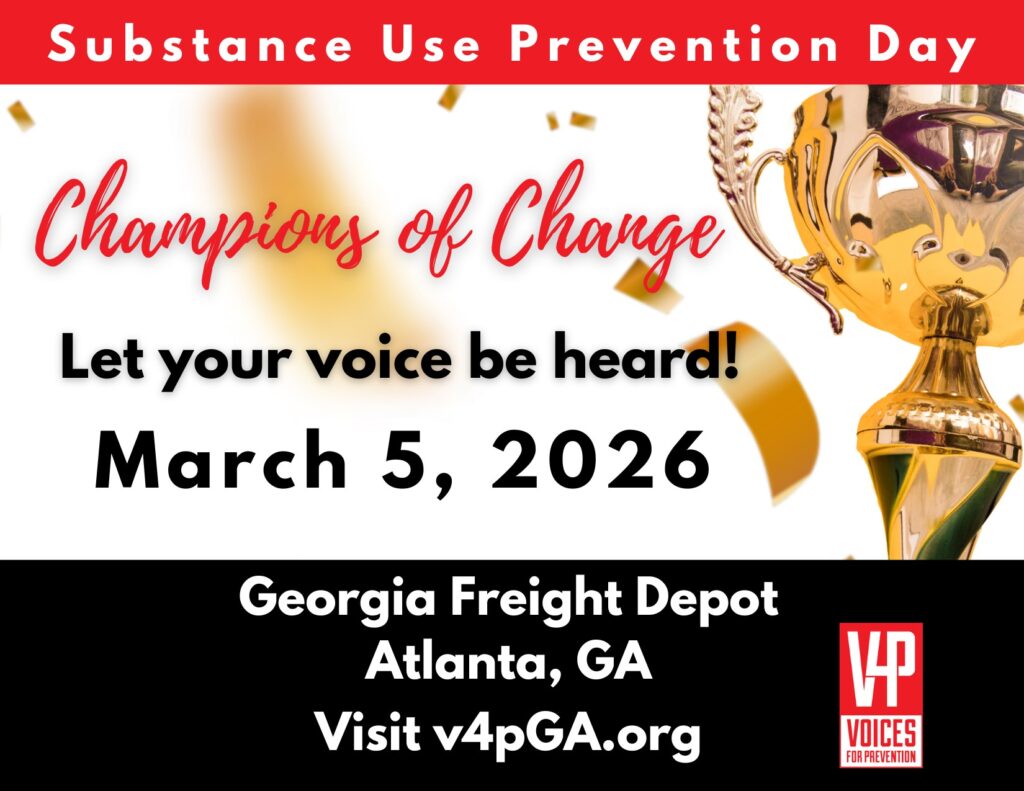
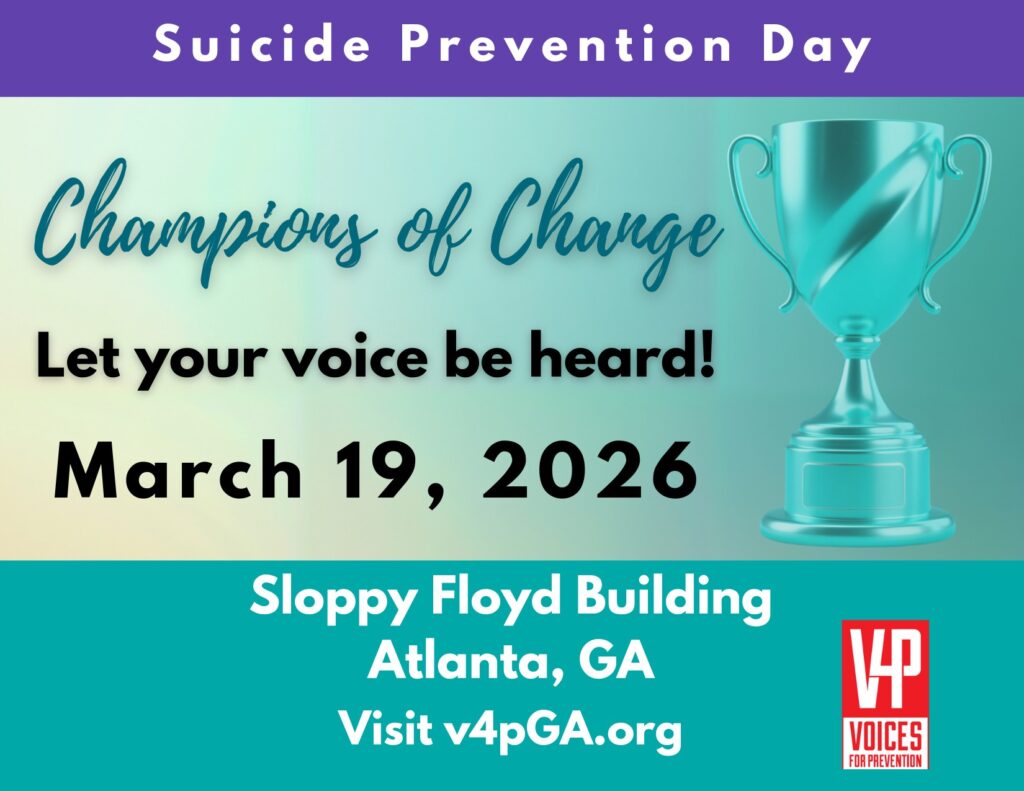
2026 Prevention Days
The Cycle of Advocacy
The cycle of advocacy is a strategic, step-by-step process for achieving a goal by identifying
an issue, developing a plan, implementing actions, and evaluating the results to improve
future efforts. The cycle typically involves steps like researching the issue, setting clear goals,
identifying target decision-makers, crafting messages, planning and implementing tactics,
and monitoring progress to inform the next steps.
Key Stages of the Advocacy Cycle-
While models vary, the core stages of the advocacy cycle include:
1. Issue Identification and Analysis: Researching the issue to understand its scope,
identifying stakeholders, and gathering evidence.
2. Goal Setting: Defining specific, measurable objectives for the advocacy effort.
3. Strategy and Planning:
Identify Targets: Determining who the decision-makers are.
Develop Messaging: Crafting a clear message and the specific “ask”.
Choose Tactics: Selecting the most effective actions, which can include public
education, direct lobbying, storytelling, and coalition building.
Set Timeline: Establishing a timeframe for the campaign.
4. Implementation: Putting the advocacy plan into action.
5. Monitoring and Evaluation: Tracking progress, assessing successes and challenges, and
using this information to adjust and refine the strategy for the future.
Why the Cycle is Important-
1. Strategic Approach:
It provides a structured framework for a systematic approach to advocacy, rather
than relying on spontaneous efforts.
2. Adaptability:
The cyclical nature allows for flexibility, enabling advocates to adjust their
strategies based on ongoing results and evolving circumstances.
3. Effectiveness:
By reflecting on successes and failures, advocates can become more effective over
time.
4. Accountability:
The evaluation phase ensures that progress is measured, and actions are accountable
to the stated goals.
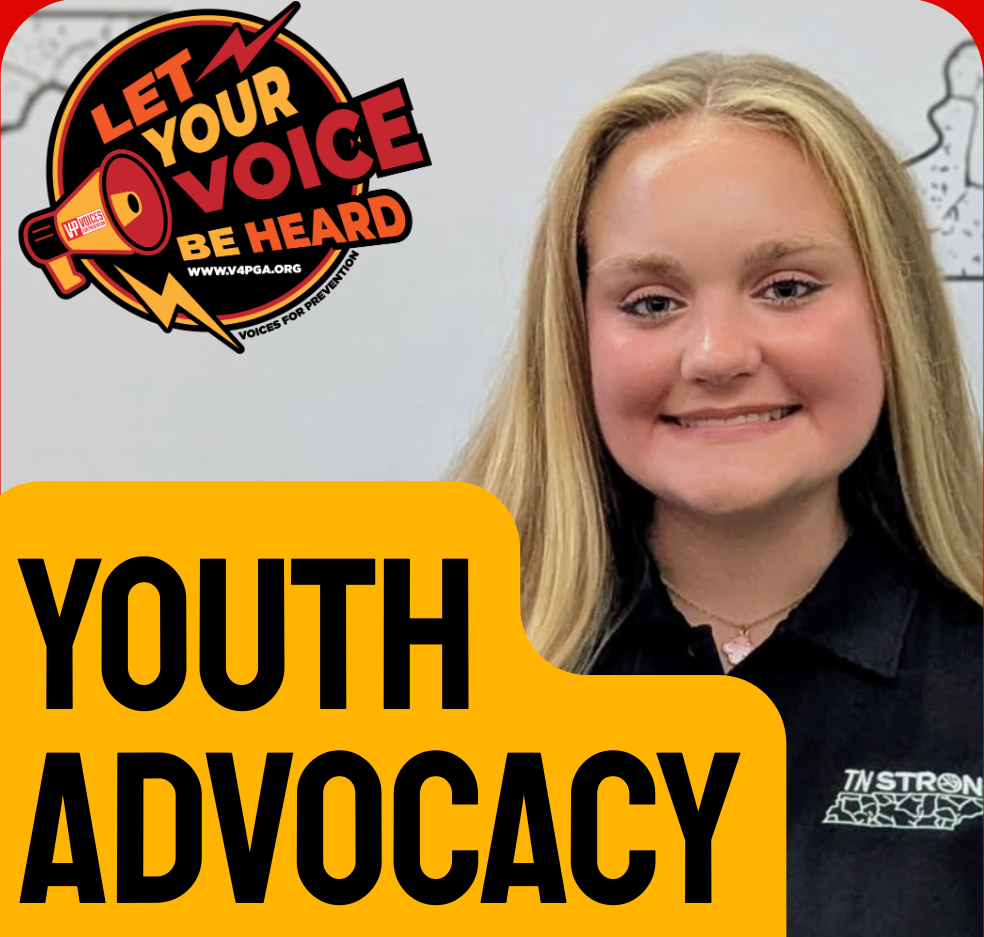
As a rising high school junior, Annabelle Lovell is already a four-time attendee of CADCA’s Mid-Year Training Institute and a dedicated youth advocate in the fight against substance misuse. Her prevention journey began in 2021, when, as a seventh grader, she joined the Weakley County Prevention Coalition (WCPC). That same year, she was named a statewide youth anti-tobacco ambassador for the TNSTRONG (Tennessee Stop Tobacco and Revolutionize Our New Generation) program through the Tennessee Department of Health.
Through TNSTRONG, Annabelle helps strengthen her school district tobacco policies, collaborate with youth across Tennessee, and produce compelling public service announcements warning about the dangers of nicotine use. In 2022, she was awarded a scholarship to attend her first CADCA Mid-Year in Orlando, Florida—an experience that solidified her passion for community advocacy. She returns each year, building leadership skills and deepening her commitment to public health initiatives.
Annabelle has represented WCPC at Tennessee’s Day on the Hill, where she’s spoken directly with lawmakers about the urgent need for rural prevention efforts. She has been an active voice in youth mock sessions of the Tennessee House of Representatives, where students debate real-world policy solutions. She’s also shared her expertise at events like the Tennessee Teen Institute (TTI), TNSTRONG Summit, and DARE graduation ceremonies, inspiring others to stay substance-free and embrace healthy teen lifestyles.
Annabelle is an honors student active in multiple school clubs and serves as secretary of her Student Council. She is a student athlete participating in both cross-country and track. As a servant leader, Annabelle remains deeply engaged in her community, working to support organizations that empower today and tomorrow’s youth. Following high school, Annabelle plans to pursue a career in law.
In case you missed the Webinar, please click here to watch the video.
Member Spotlight

Name:- Michelle Cope
Organization: The Yellow Elephant Ministries, Inc.
Job Title and role within the organization: The Yellow Elephant Ministries was created in memory of my friend Christina, who died by suicide after feeling like a burden. Our mission is to break the silence around suicide, offer hope, and walk alongside families and communities with support and resources. Through outreach, memorial projects, workshops, and partnerships, we remind people that their stories matter and they are not alone. One of our key efforts is the Elephant Love Fund, which helps families with funeral costs, counseling, and travel during times of loss, ensuring support is available when it’s needed most. Everyone who serves with The Yellow Elephant, including myself, is a volunteer — giving their time and heart to carry this mission forward.
My role: As founder, I lead these efforts by sharing my own journey, building community connections, and creating safe spaces for healing and awareness. My heart is to turn loss into light and to make sure others always know there is hope.
What is your favorite thing about working in the field of prevention? My favorite part of prevention is walking alongside people—helping them see the hope that still exists, reminding them they are not alone in how they feel or what they’re going through. I believe deeply that pain is never in vain, and that through connection, we can find purpose in even the hardest moments. What I love most is restoring joy and hope and building community—because community is where healing begins, and it’s my favorite part of this work.
What is one piece of advice to those who work in the prevention field? One piece of advice I’d give to anyone working in prevention is this: yes, it gets heavy and yes, it gets hard—but that’s not the main part of the work. The heart of prevention is the hope that gets restored. It’s not easy, and it’s not for just anybody, but if you feel called to it, it’s worth every bit once you’re in it.
Any recent events your org. has held that you want to promote? Earlier this month, The Yellow Elephant hosted two Be The Light Night events—September 6th in Grady County and September 10th in Colquitt County. These evenings created space for powerful voices of lived experience, whether through survival or loss, to share stories of hope and resilience.
Any other comments? The most important thing is to keep working together and to be the light. It’s okay to shine, and it’s also okay to let others shine their light on you. None of us are ever truly alone in how we feel. That’s why building strong, supportive communities matters so much — because together, we can keep lifting each other up.
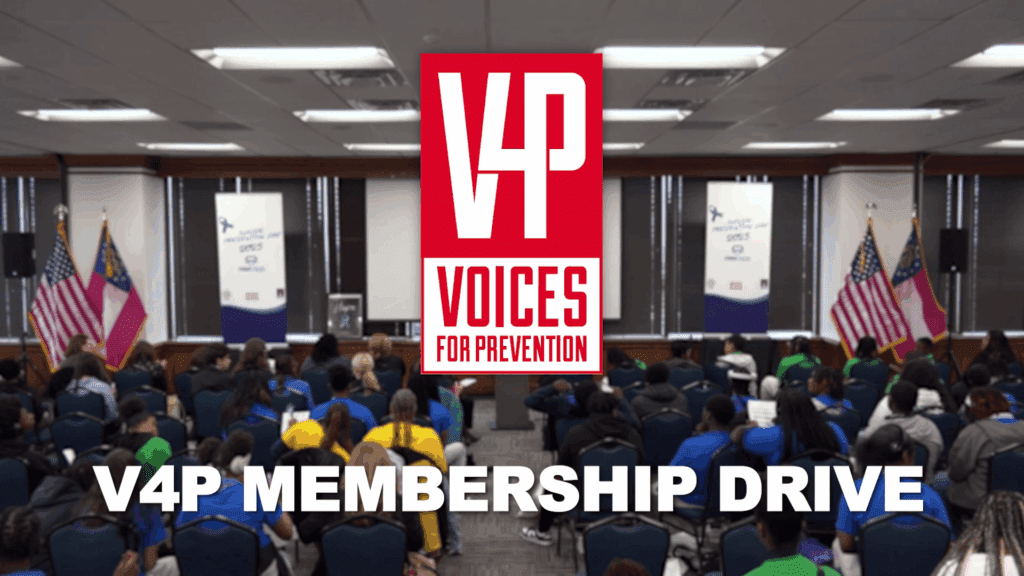
Membership is FREE
To become a member with V4P is free. Membership includes exclusive webinars, networking opportunities, and much more. You can also be involved with V4P events via our social media accounts. Our social media handle on Instagram, Twitter, and Facebook is V4PGA. So, click that follow button and be a part of the V4PGA experience!
Upcoming Events

December
12/11 – GPDAPI Collaborative Meeting – Norcross, GA
January
TBD – V4P Advocacy Webinar
1/28 – Addiction Recovery Advocacy Day
February
TBD – What to Expect Webinar Substance Use Prevention Day
March
3/5 – Substance Use Prevention Day at the Freight Depot in Atlanta
TBD – What to Expect Webinar Suicide Prevention Day
3/19 – Suicide Prevention Day at the Sloppy Floyd Building in Atlanta
INSPIRATIONAL THOUGHT

Top 5 ideas to stay motivated in your community:
- Join a Group: Engage with a community or group that shares similar goals and can provide support and encouragement.
- Find a Mentor: Seek guidance from someone who has achieved what you aspire to accomplish.
- Find an Accountability Partner: Collaborate with a friend or colleague who can help keep you accountable for your progress.
- Share Achievements: Regularly communicate your progress with others to reinforce your commitment.
- Participate in Challenges: Get involved in competitions or challenges that inspire you to stay on track.